UI Design SaaS Company, 2024
Unifying Interfaces: Creating a Cross-Platform Design System
Created a modular design system that unified UI patterns across platforms and accelerated design-to-dev workflows.
UX + UI Design Gub.uy, 2022
Overview
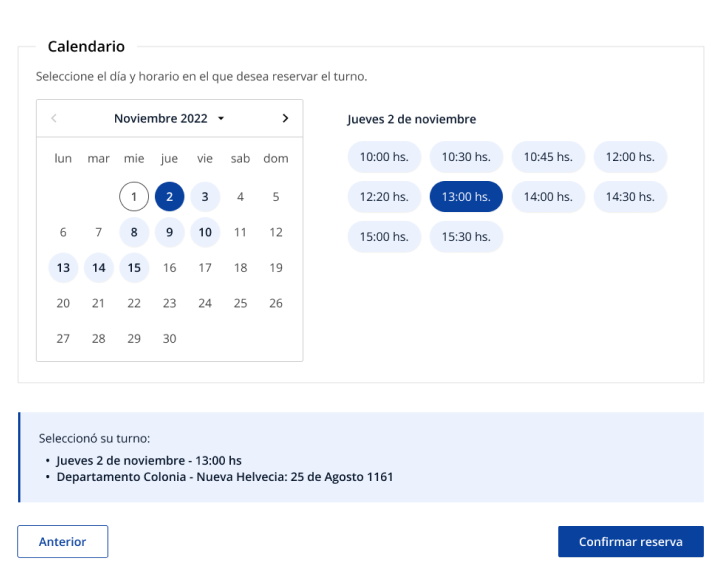
This project involved a complete redesign of an existing appointment scheduling website for Gub.uy. The focus was on creating a user-friendly and accessible platform that simplifies the booking process and enhances the overall user experience.
Contributions: Led UX research, designed intuitive user flows, created wireframes and high-fidelity mockups, and ensured accessibility compliance throughout the design process.
Context and project goals
Gub.uy serves as Uruguay's official online portal for citizens and residents to access government information and services. Recognizing a need to improve accessibility across the platform, we were engaged to analyze and redesign the appointment scheduling process for requesting an identity document (ID). Our objectives were: identify and address accessibility barriers, enhance overall usability, and align the design with the current site's design library. Working closely with a project manager over two weeks, our team focused on delivering impactful improvements within tight time constraints. The core challenge lay in streamlining a process that presented significant difficulties for users seeking appointments.
Key obstacles faced
The existing appointment scheduling process on Gub.uy presented several challenges:
Gathering insights and problem solving
To understand the existing issues and identify opportunities for improvement, we conducted a combination of research and analysis:
Creating a high-fidelity prototype
We began by generating a wide range of potential solutions through collaborative workshops with the project manager. We evaluated the flow and organization of information within the scheduling process and created isual representations of user journeys to identify pain points and opportunities for simplification. Then, we rapidly exploring different layout options and interaction patterns. We also had regular feedback sessions with the project manager to ensure alignment with business requirements and design system guidelines.
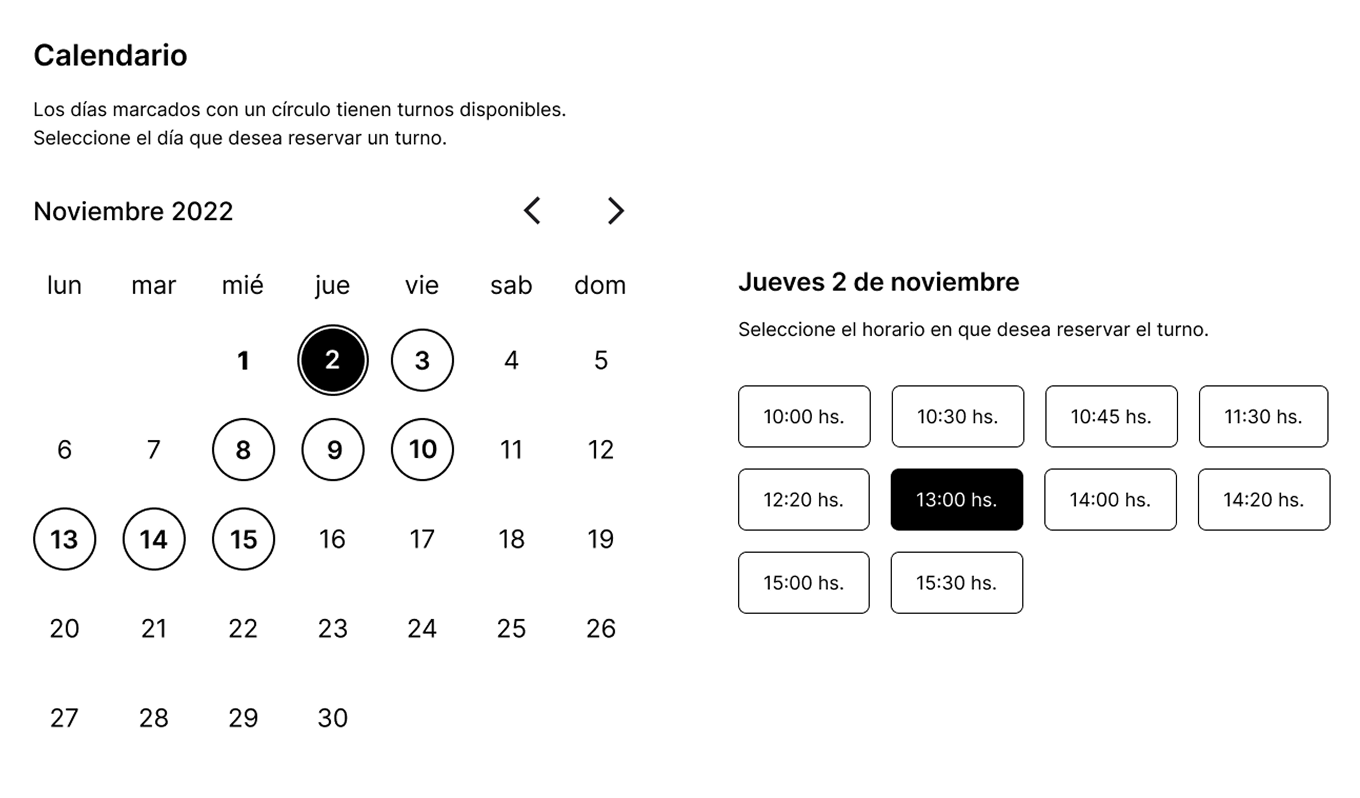
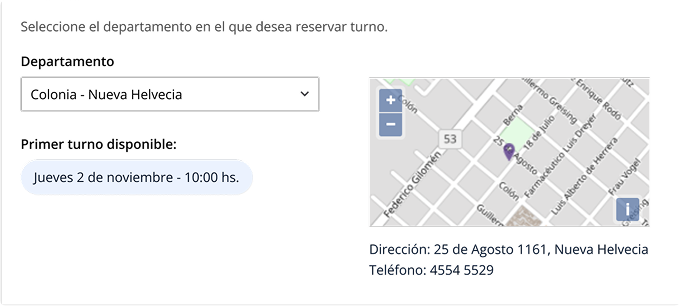
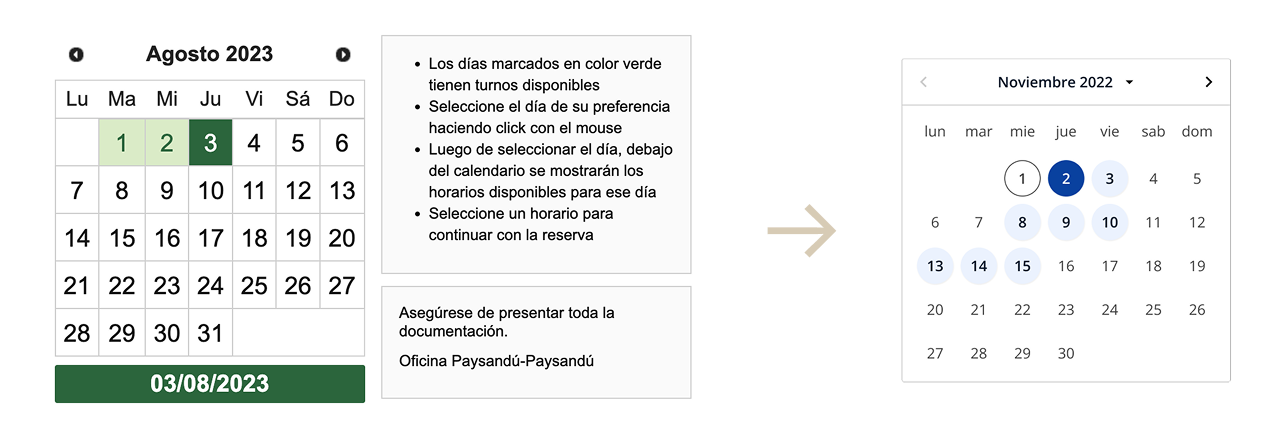
Our final proposal focused on redesigning the appointment scheduling step, addressing the most critical usability and accessibility issues. Key changes included a simplified selection flow, removal of color-dependent cues and first available appointment slot showed.
To further refine the design and ensure visual appeal, we created a high-fidelity prototype incorporating the Gub.uy brand guidelines. This allowed for more realistic user interaction testing and stakeholder feedback.
Delivering our design
The project was delivered at medium fidelity due to time constraints, with a detailed handover package including a comprehensive design documentation and accessibility handover for developers.
We also identified several opportunities for future iteration:
Impact and outcome
This project demonstrated the power of a user-centered design approach, even within tight time constraints. By prioritizing accessibility and usability, we were able to create a significant improvement in the Gub.uy appointment scheduling process. Key learnings included: The importance of thorough accessibility audits in identifying hidden barriers for users. The value of rapid prototyping and iterative feedback loops in refining design solutions. The need for ongoing user testing to ensure long-term usability and effectiveness.
UI Design SaaS Company, 2024
Created a modular design system that unified UI patterns across platforms and accelerated design-to-dev workflows.
UX Design + Accessibility Uruguay Census, 2023
Audited and improved the digital census experience to ensure it was accessible, intuitive, and inclusive for all users.
UX + UI Design Gub.uy, 2022
Designed an internal admin system to simplify complex workflows and support operational tasks.